
ATHENS
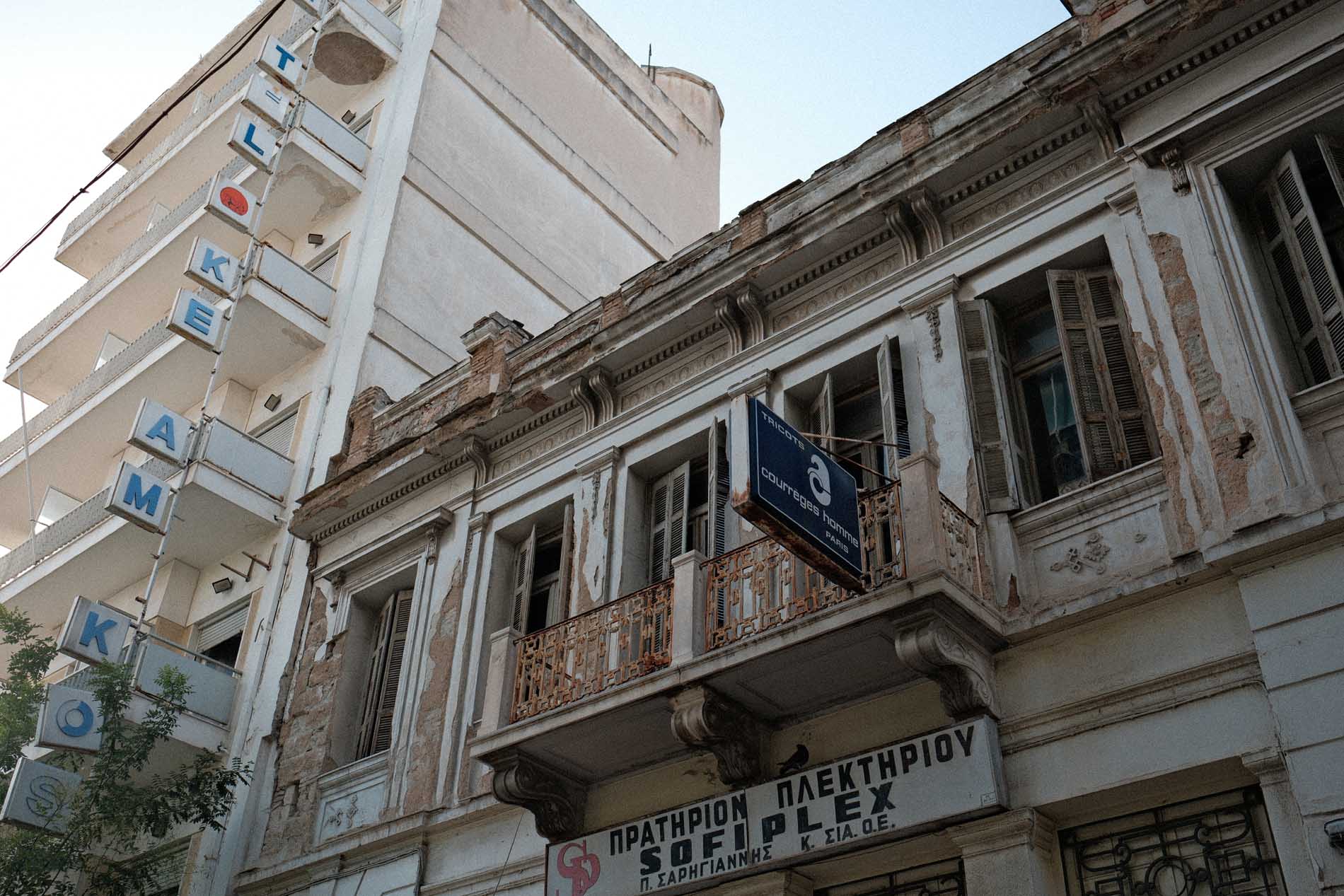
In Athens, the project targets a place called ‘PLEX’, located in the Athenian neighbourhood of Metaxourgeio.
PLEX aims to create structures that support artistic practice, encourage collaboration with the local communities, and improve the overall quality of life in the city.
PLEX is BIOS’ boldest experiment yet, located in Kerameikos: a neighbourhood of thresholds, where ancient burial grounds meet potters’ quarters, and today abandoned neoclassical houses coexist with migrant families, short-term rentals, and artists transforming vacant spaces.
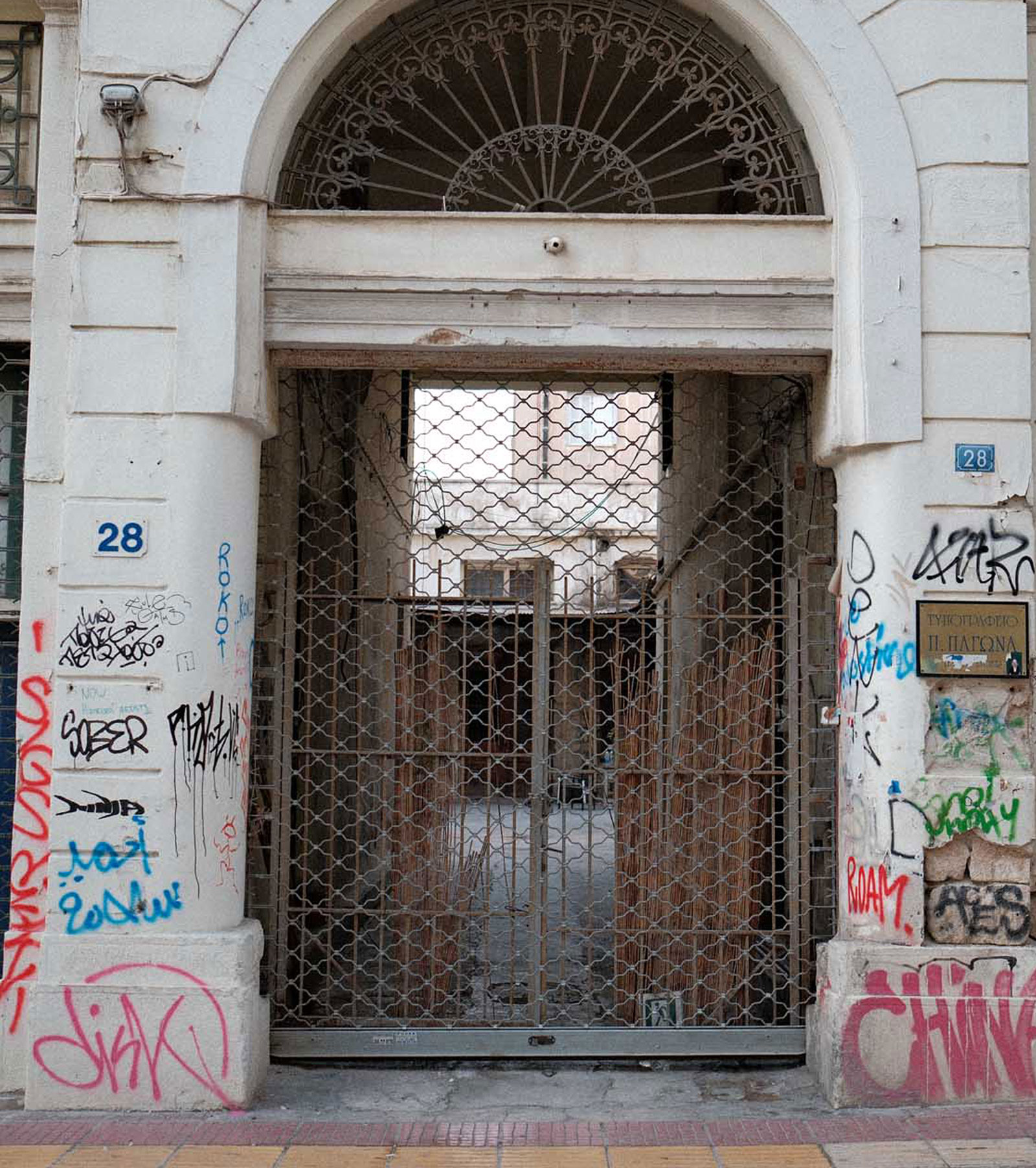
Within Future DiverCities, BIOS is operating PLEX PILOT as a living laboratory testing what culture-led urban futures can mean when grounded in local realities. The project unfolds across two neighbouring buildings on Kerameikou Street: Kerameikou 28, a historic weaving factory complex becoming our main cultural centre for exhibitions, performances, and community gatherings; and Kerameikou 30, the adjacent hotel building becoming Kerameikos Hotel, providing social housing and artists’ residencies. These spaces form a cultural and social infrastructure BIOS designed to support artistic experimentation, community engagement, and inclusive urban regeneration, while anchoring artists in the neighbourhood and creating economic activity without displacing local life.
The Starting Point
BIOS launched PLEX PILOT to respond to a contradiction at the heart of contemporary Athens: the city’s cultural vibrancy is internationally recognised, yet conditions for artists are precarious and unsupported. Athens feels like it is at a critical point. Housing prices have risen over 50 percent in recent years, and nearly 80 percent of renters are considered overburdened. Artists, who have long sought out neighbourhoods like Kerameikos for affordability and community, now face displacement. Kerameikos illustrates this contradiction drastically. A neighbourhood of thresholds, historically rich with ancient burial grounds, potters’ quarters, and industrial heritage, it is today a patchwork of abandoned neoclassical houses, migrant families squeezed into small apartments, short-term rentals pushing residents out, and artists transforming vacant spaces. BIOS aimed to intervene before this cycle repeats: by building support structures that allow creators and local inhabitants to shape change, rather than being used as temporary aesthetic “upgrade” for gentrification. This requires data, listening, community trust, and a space where dialogue can happen.
The Solution
“Sharing ideas and vital information has helped us navigate the challenges of working as artists in Athens.”
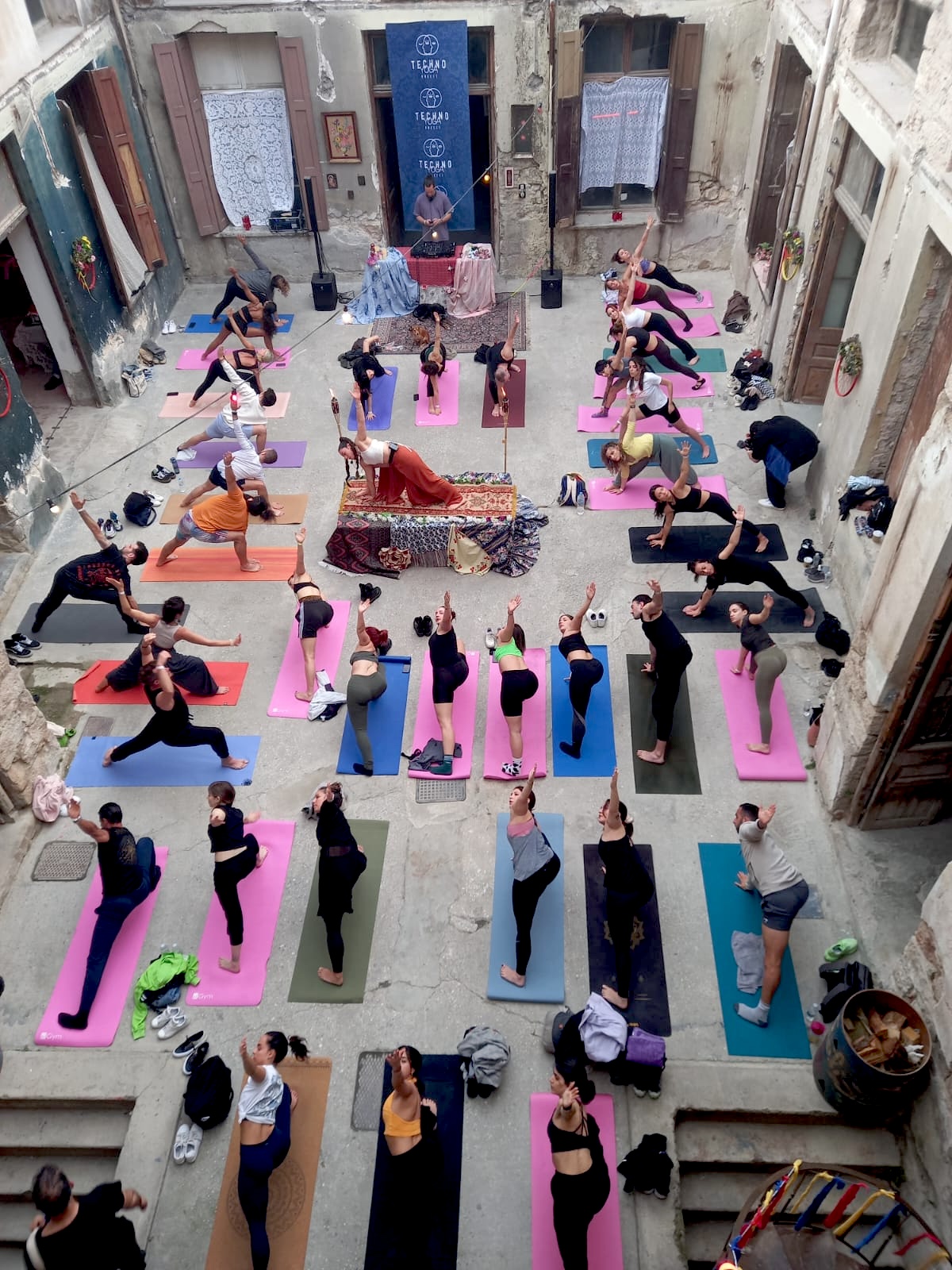
BIOS positioned PLEX as a cultural and social infrastructure combining multiple elements. The project draws on years of our research: the CreatorsClass survey with over 300 artists, mapping of abandoned buildings, interviews with residents, and participatory workshops. BIOS’ vision is to create a support structure anchored in two neighbouring buildings on Kerameikou Street. Kerameikou 28, a historic weaving factory complex, will become the main cultural centre for exhibitions, performances, workshops, and community gatherings. Kerameikou 30, the adjacent hotel building, will become Kerameikos Hotel: a social housing and artists’ residency unit, providing affordable living for creators while rooting them in neighbourhood life. Together with an open-air designers’ market and community gardens, these form a superstructure that anchors artists in the area, creates space for residents, and generates cultural and economic activity without displacing local life. PLEX Open Pilot 1 on 26 September 2025 marked the public’s first chance to step into this vision.
Key Moments & Decisions
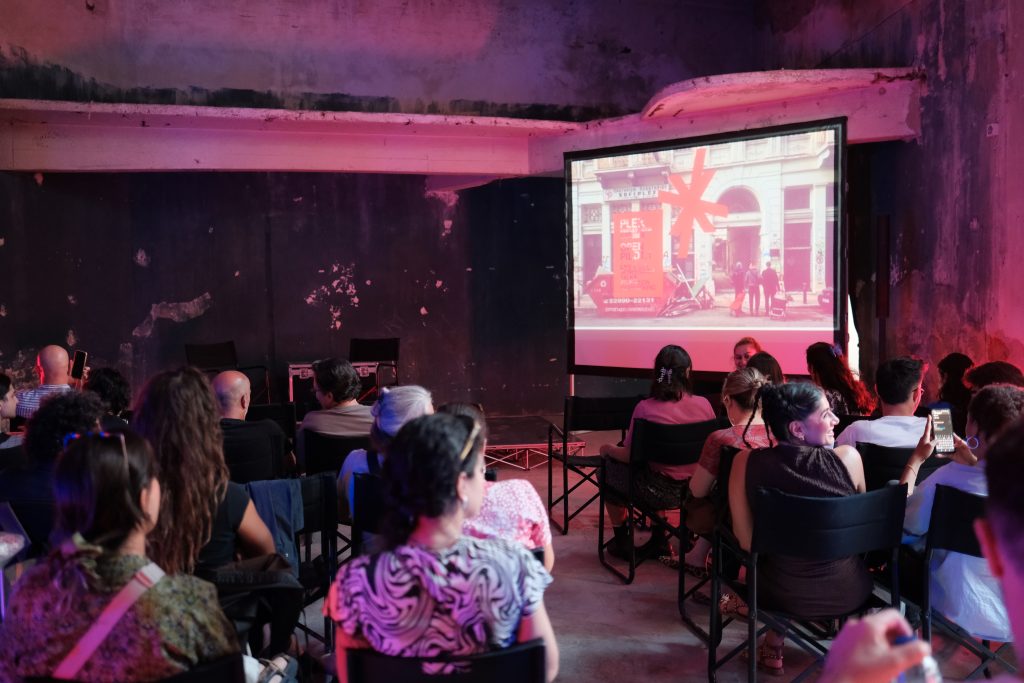
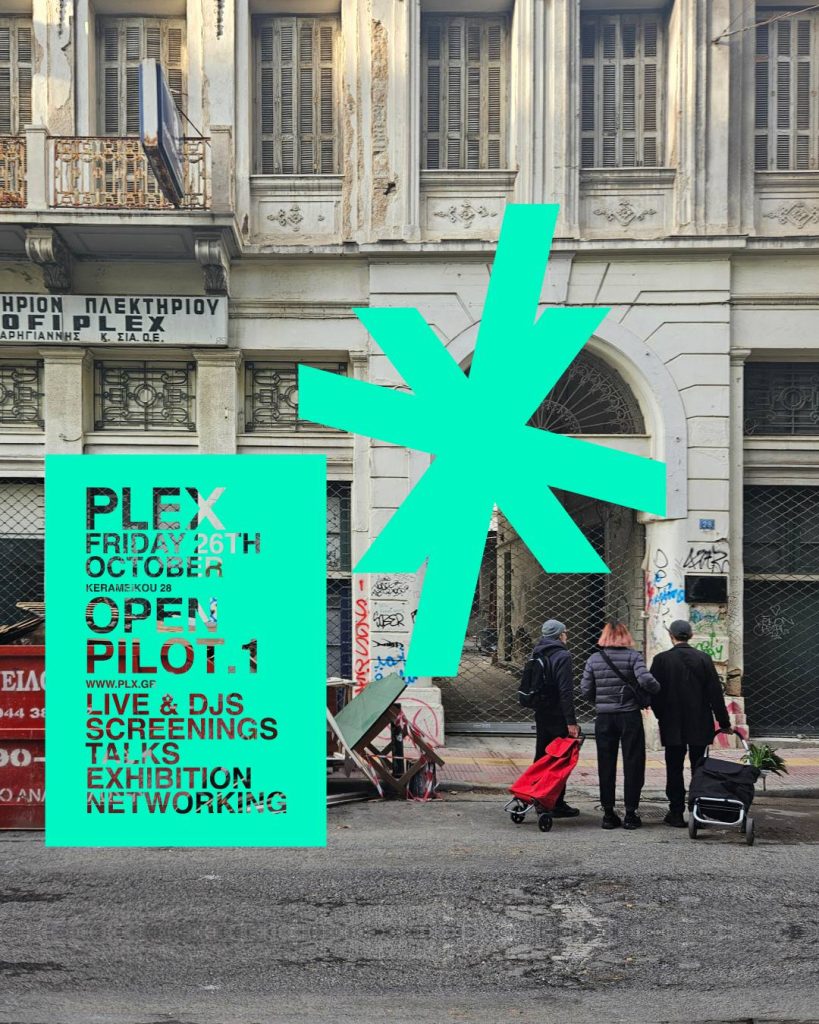
A crucial decision was to define PLEX not as a fixed renovation or permanent institution, but as a living prototype that could be activated immediately. On Friday, 26 September 2025, we opened the doors of PLEX Open Pilot 1, the first in a series of events shaping PLEX’s identity. This approach serves as a meeting point, testing ground, and public signal that another model of urban transformation is possible, allowing us to respond to Kerameikos’ volatility without waiting for ideal conditions.
A second key moment was the start of our research process on the working and living conditions of creators, which included mapping and survey data collection. This shifted our pilot from visibility-driven programming to structural groundwork, creating a solid base for future support systems and dialogue with the city.
A third defining moment was when we started realising that people are returning to the building and slowly a community was forming again.
“The failures of urban renewal reflect a failure… to realize that people, not structures, really determine a city’s success.”
Challenges
PLEX operates in a neighbourhood with high sensitivity: rapid investment pressure, visible social inequality, and competing narratives of what the area should and could become.
One challenge for sure was operating as a cultural actor without becoming a tool of gentrification ourselves. The solution was to ground our work in research and coalition-building rather than only visibility and events. Another challenge was the structural lack of support frameworks for artists in Athens: limited public funding, unstable housing, expensive rents, and fragmented ecosystems. BIOS tried to respond by positioning PLEX as a site for building support mechanisms, not merely showcasing culture. A third challenge was building community trust: Before BIOS purchased the building, a local artist collective had been squatting the space and perceived the transition as displacement. This created initial resistance and mistrust. BIOS responded through continuous dialogue, transparent communication, and by creating participatory formats that invite local voices into shaping the project’s direction. Lastly, gathering data required care and caution; our survey and mapping had to be framed respectfully, so creators felt their realities were being meaningfully recognised.
Qualitative Impact
Key Lessons & Insights
One central insight is that regeneration cannot be built on visibility alone; it needs support structures and dedication. Athens has enormous creative energy, but without affordable housing, stable workspaces, and supportive ecosystems, that energy becomes extractable and fragile. A second insight is that “impermanence” is not just a spatial condition, it shapes social life. Temporary urban conditions intensify precariousness, but they also allow experimentation. We’ve learned that agile cultural infrastructures can create continuity through recurring practices: mapping, community presence, open events, and coalition-building. Finally, the neighbourhood itself teaches us that urban futures must be negotiated with those already living there.
Cluster: Impermanence
BIOS addresses impermanence not as a temporary inconvenience to overcome, but as a condition to work with which might even be worth protecting.
Kerameikos’ volatility creates instability for those who live and work in the area, especially artists who often rely on temporary spaces and low-cost rents. Our starting point was to acknowledge that the neighbourhood is continuously changing, and that any cultural intervention must be able to adapt without becoming a vehicle for displacement.
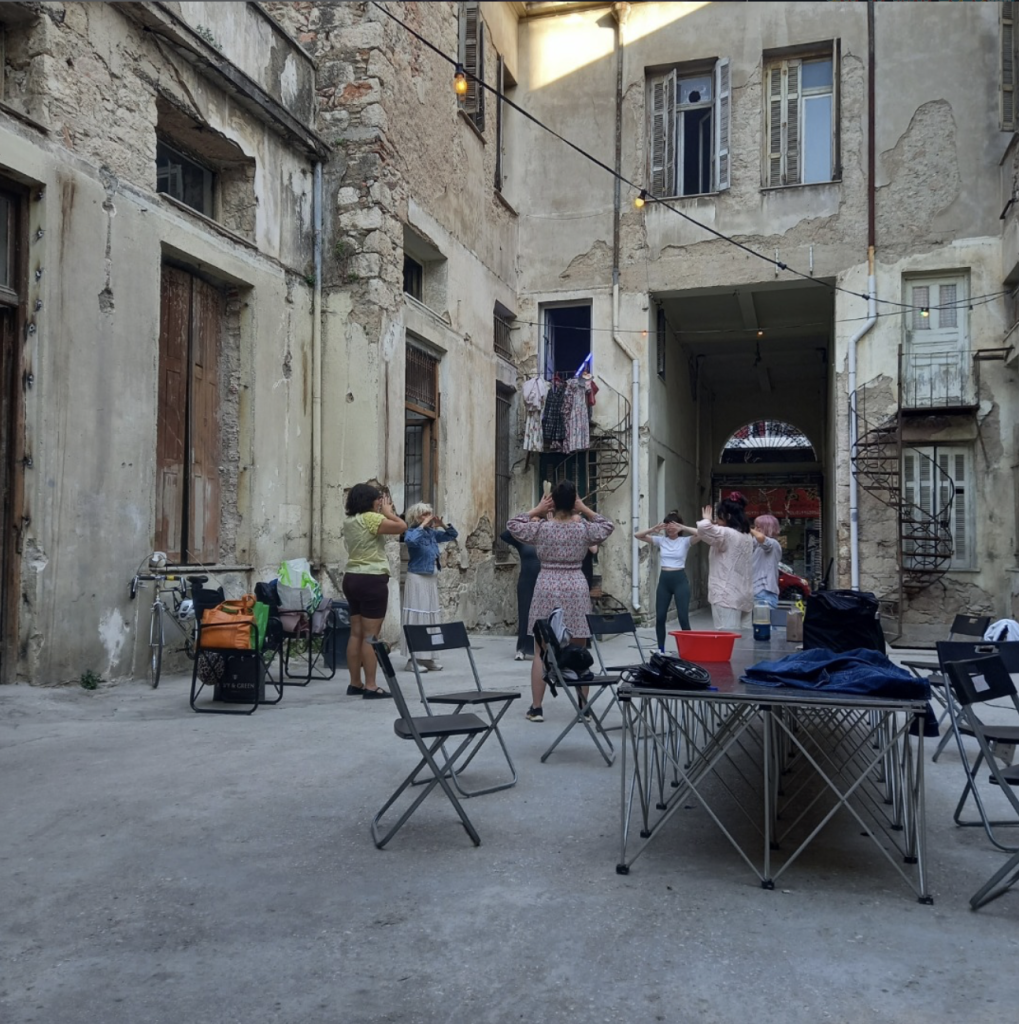
We approached PLEX PILOT as an agile infrastructure or platform rather than a fixed institution: a space that can shift between functions: Community gathering point, creative workspace and cultural venue. This flexibility enabled immediate activation through events and encounters, while leaving the long-term identity of the site open, co-shaped through use. In parallel, our mapping and survey-based research was a first step to understand creators’ living and working conditions in Athens, filling a major data gap and reframing creator precarity as an urban policy issue.
By working with temporary programming, flexible partnerships and evolving spatial practices, we strengthen impermanence as an asset: it allows experimentation without premature closure, makes space for unexpected collaborations, and helps build resilience through continuous adaptation. Our pilot reveals that the most important form of permanence may be a social one, namely through sustained relationships between creators and communities.
“Artists within a city form a community, not a transitional group used to achieve gentrification.”
We believe PLEX has contributed to shifting how cultural regeneration can be imagined in Athens: not as cosmetic upgrading, but as a slow infrastructure of care, knowledge, and participation. The research work, mapping and survey design has created a basis for wider advocacy around artists’ needs and for future conversations with institutions, funders and potentially municipal actors.
Qualitatively, PLEX is contributing to strengthening cultural visibility for Kerameikos. By positioning creators as residents of the city rather than temporary “coolness providers,” we challenge simplistic creative-city stories. PLEX also helps connect local and international creative communities in Athens, supporting cultural bridge-building without erasing local specificity. As a pilot site, it functions as a demonstration: a visible experiment of what it looks like when a cultural organisation actively supports artists’ working conditions and neighbourhood relationships at the same time. The wider impact lies in this new strategy as a template, one that can influence policy discussion and future cultural governance.
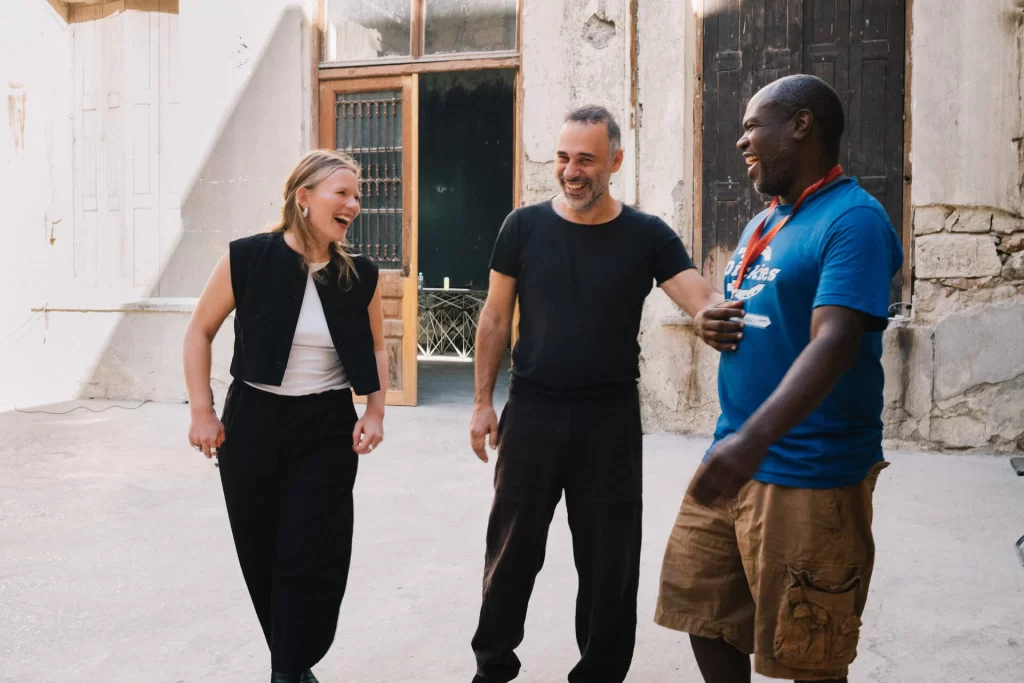
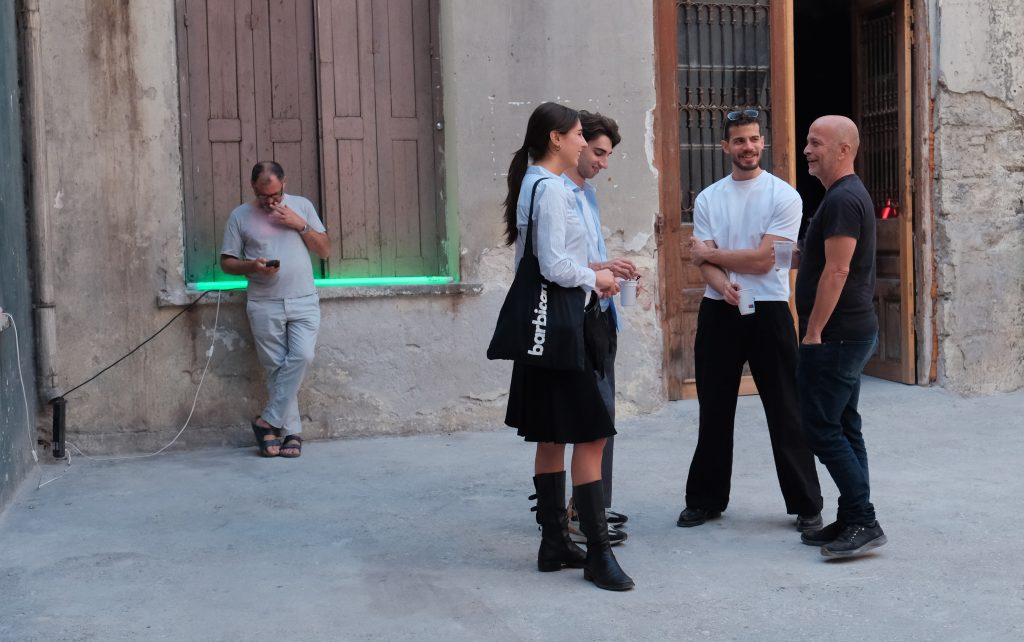
The PLEX team: Vassilis Charalampidis, founder of BIOS and president of the European Network of Creative Hubs, Bjorn Ricketts, and Luca Tueshaus. Photo: Paris Tavitian/LIFO
Discover the Pilot:
Explore the neighbourhood through the local coalition’s perspective: Metaxourgeio.
PLEX Open Pilot 1: Athens’ New Cultural Experiment Begins in Kerameikos