
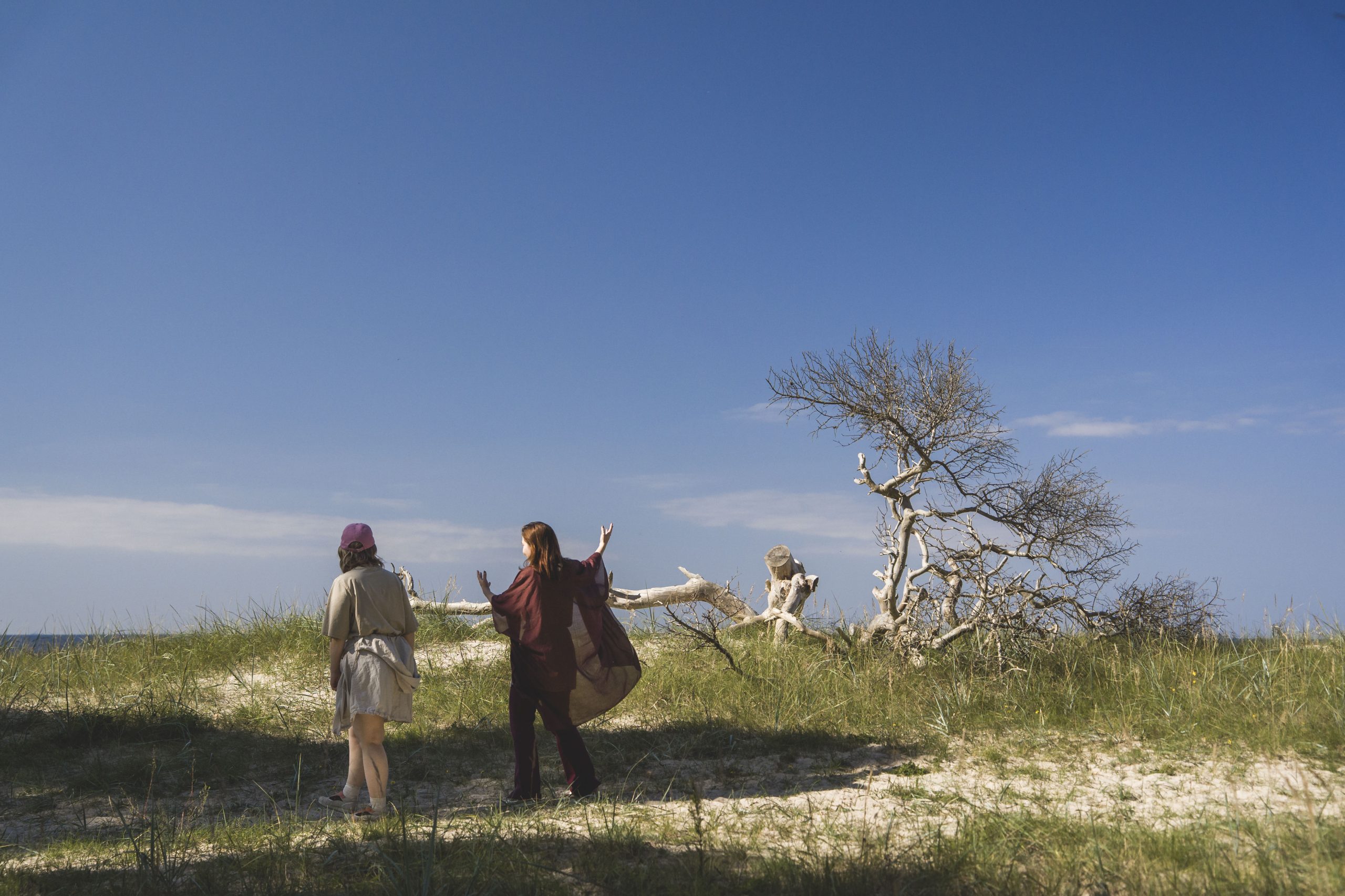
LIEPAJA
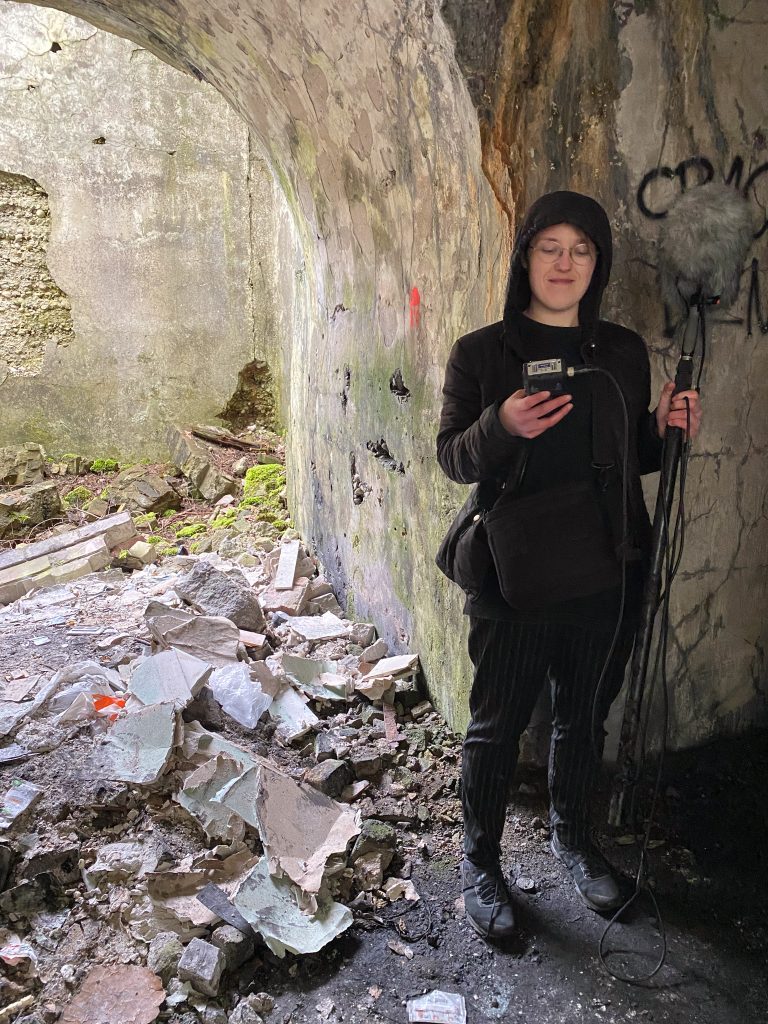
The focus of the Liepāja pilot project has been to challenge the stigma surrounding Karosta, a former military district. This area is still characterized by numerous vacant and deteriorating Soviet and Russian Imperial military buildings.
By organizing sensory mapping activities, artist residencies, and pop-up exhibitions during local festivals in the warm seasons of 2023–2025—following nature’s cycles—the Liepāja municipality and the project’s creative team have cultivated a new narrative for the district. This new perspective emphasizes the unique ecosystem services provided for free by the local biodiversity, offering both resources and inspiration to every guest and multispecies inhabitant. The local coalition’s quote has served as the project’s motto: “From Beast to Beauty.”
The Starting Point
Karosta, a district built for military purposes, has transitioned from a restricted Soviet-era zone into a district of industrial growth among decaying historical heritage. Despite covering a third of the city, it faces social stigma, coastal erosion, and a lack of recreational spaces for social gathering and cultural activities. Part of Liepaja residents consider Karosta to be a dangerous place, and visitors go there for ruin tourism. However, its mesmerising natural landscapes—including dune ecosystems and rare mire biotopes—offer untapped potential which alligns more with the self-image of the local inhabitants.
Our strategy employs artistic interventions along the Freedom Trail to transform degradation into growth. By linking the military ruins with the narrative of the local ecosystem diversity, we aim to reclaim unused resources for the community. These interventions foster connections between nature and culture, overcoming physical and social barriers.
The Approach
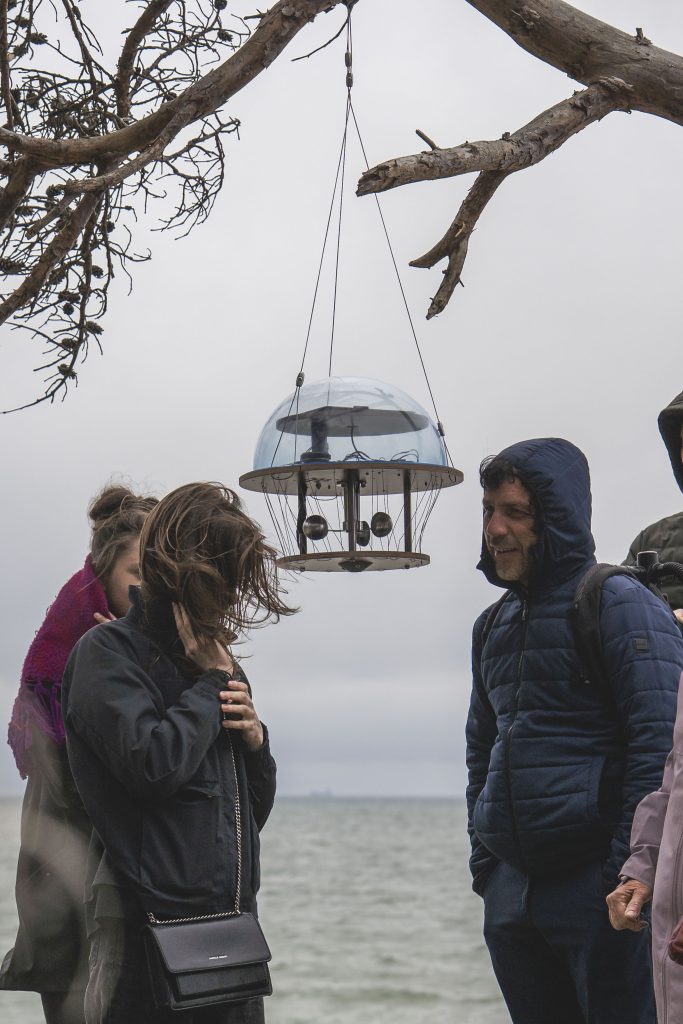
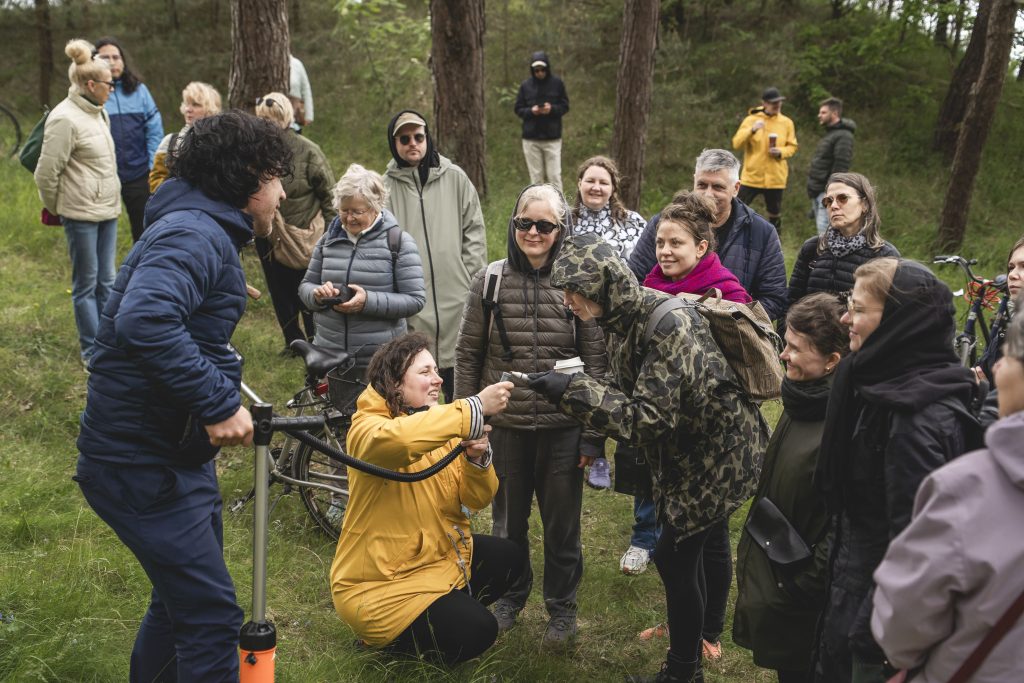
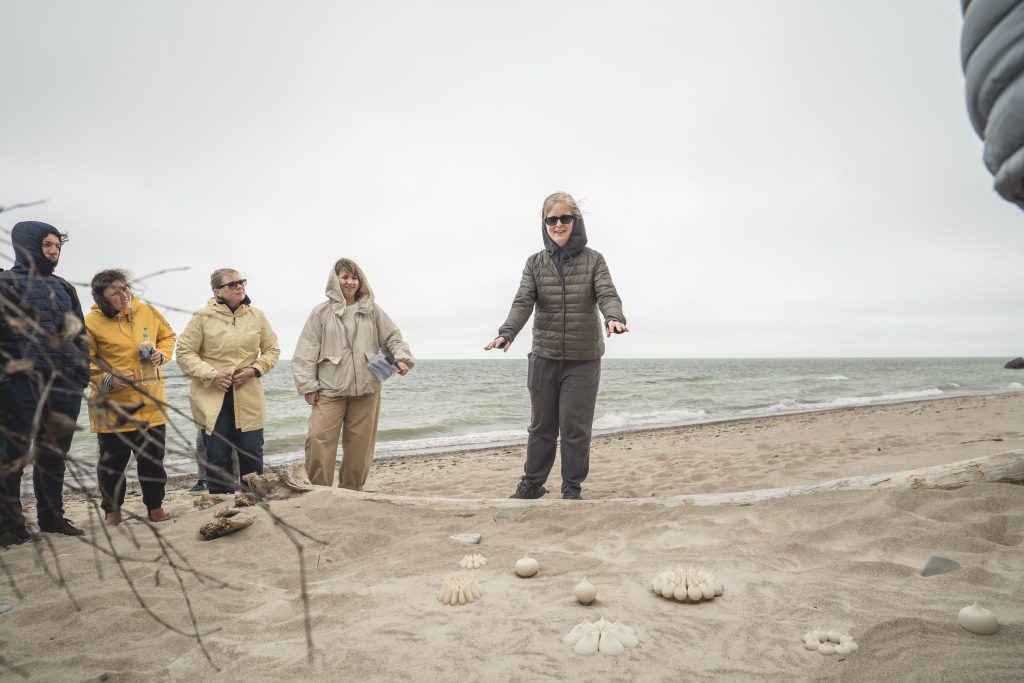
To shift the perception of Karosta from danger and ruins toward beauty and biodiversity, we focused on exploring and promoting the variety of free ecosystem services the area offers. We prioritized culture-led activities and experiences, as locals expressed a dislike for the traditional ‘project’ format. Sensory mapping activities with the local coalition, seniors, and youth helped to understand if the general public recognizes the ecosystem services around the Freedom Trail territory, and which ones they value most.
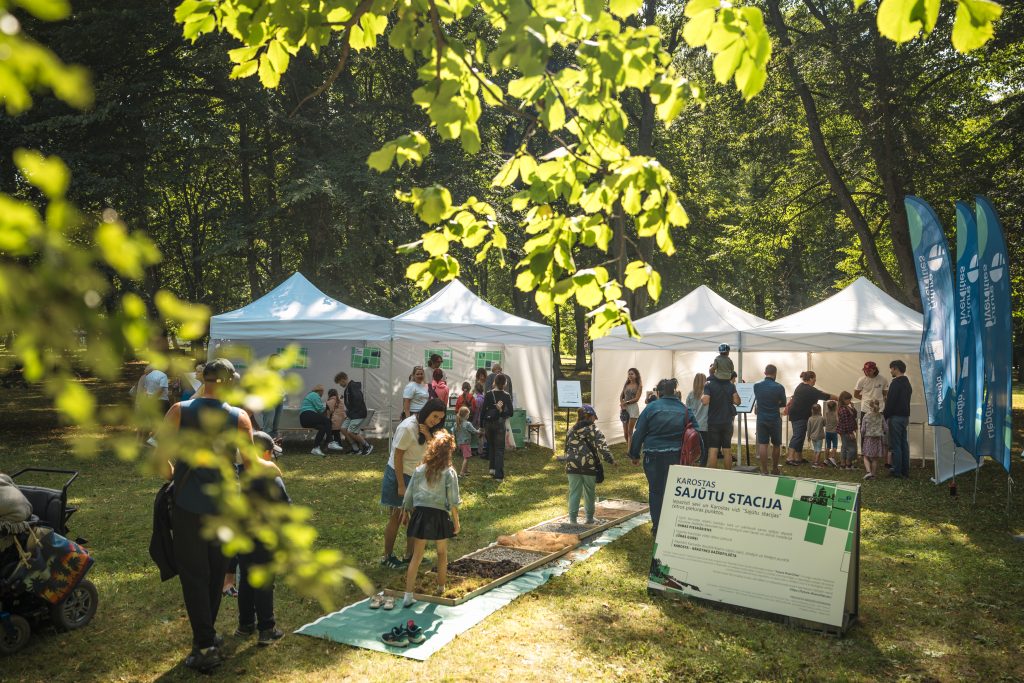
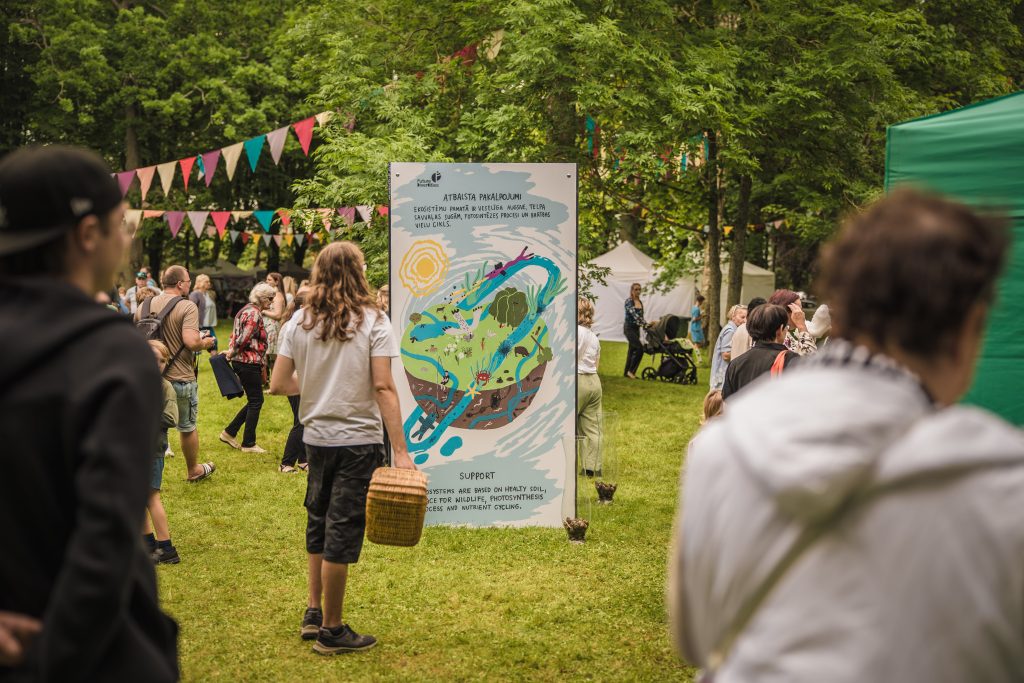
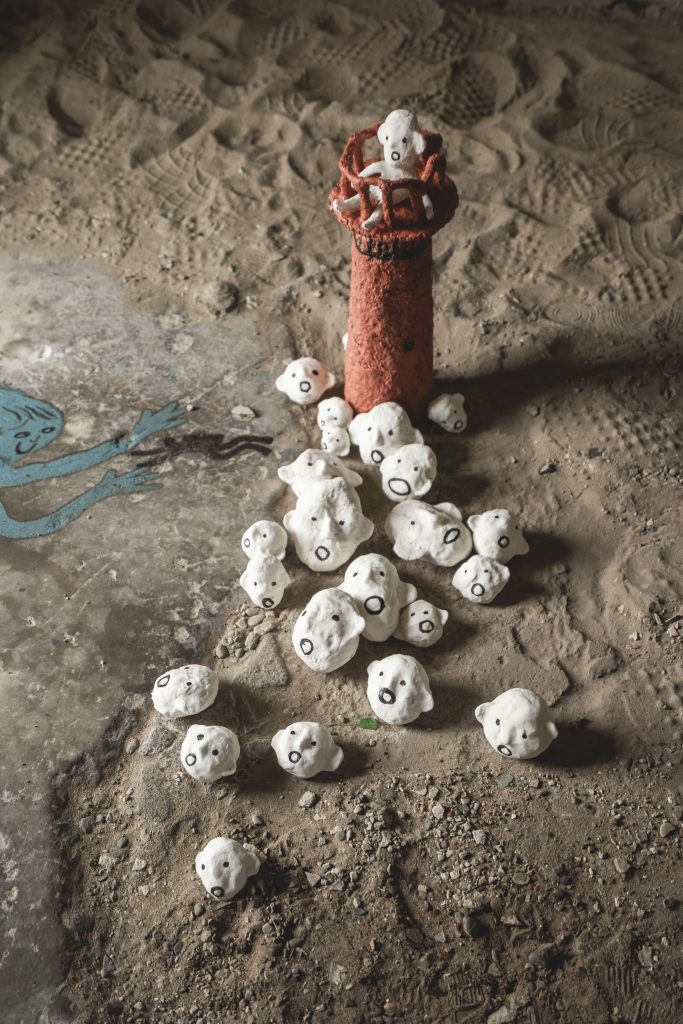
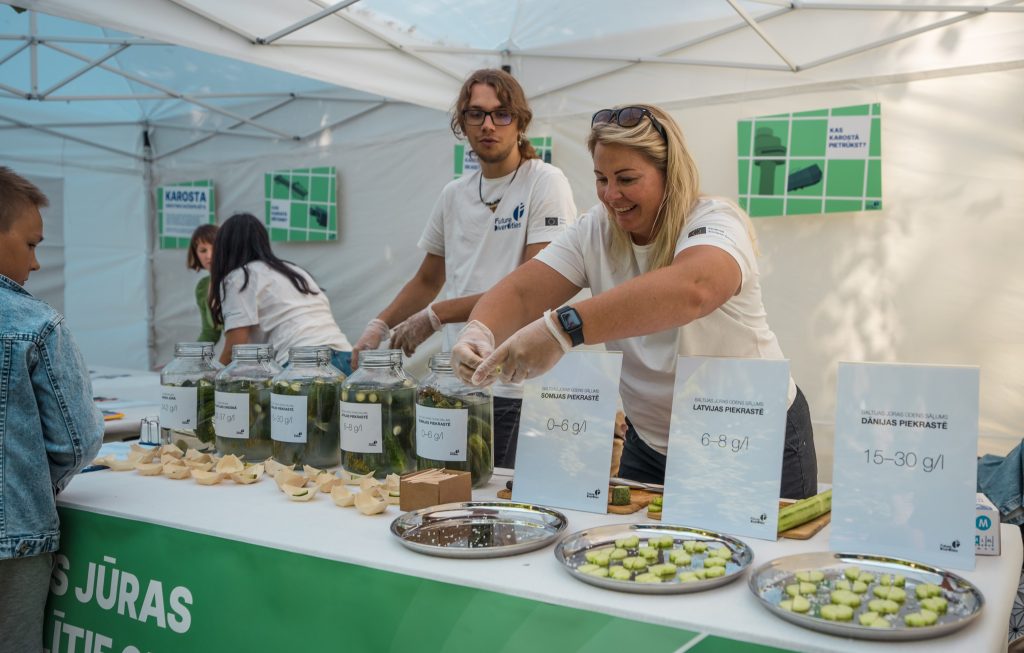
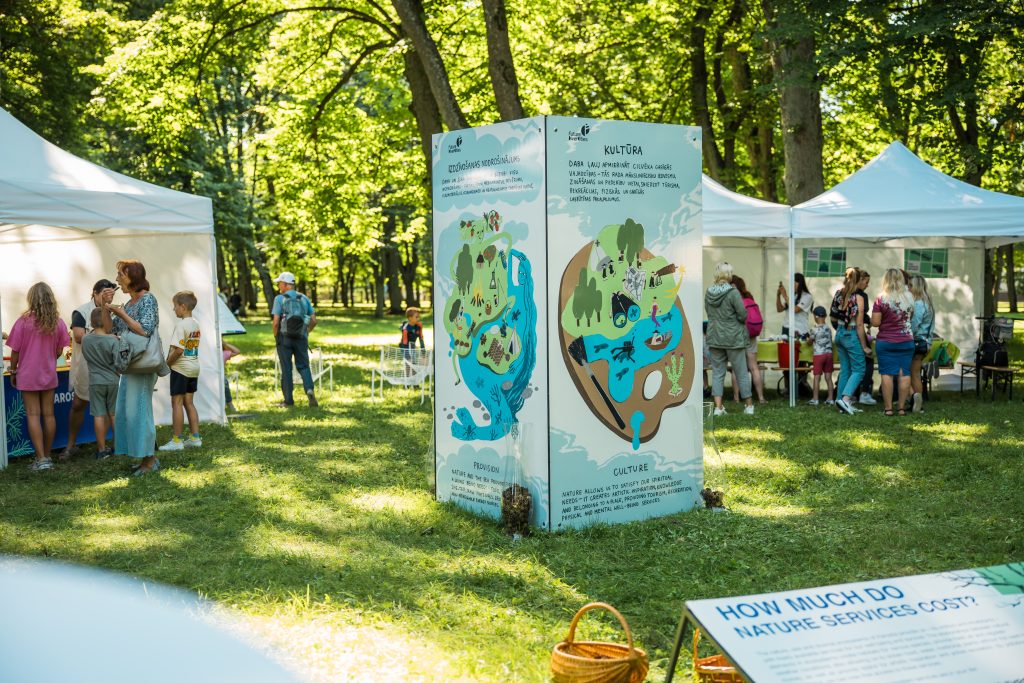
An artist residency in 2025 resulted in six biodegradable and impermanent artworks on display at the Freedom Trail, to be preserved in augmented reality, revealing the diversity of stories and emotions of the local communities which artists collected during city walks, casual talks, and interviews with nature experts and local inhabitants. The main artistic tool to inspire and record the change of Karosta’s public image was a mobile Nature Service Station installed at the largest festivities in Liepāja and Karosta during 2024 and 2025, introducing the diversity of Karosta biotopes and the riches of its ecosystem services, including creative activities for its visitors.
“From Beast to Beauty!” Local coalition during storytelling workshop, 2024
Key Moments & Decisions
A meeting with the local coalition and local youth in 2023 led to the realization that the biggest challenges in Karosta are the lack of gathering places, a sense of remoteness, and the stigmatization of the district as a risky social environment. These issues are compounded by coastal erosion, which transforms not only the natural landscape but also the military heritage—the core of the district’s identity. This led us to conclude that Karosta’s image must switch its focus from what is degrading (military ruins) to that which is growing (biodiversity).
The vast abandoned territories were a primary reason for Karosta’s inclusion in a Special Economic Zone for industrial development. However, an environment expert from the Liepāja Nature House introduced the creative team to the concept of ecosystem services, emphasizing the economic, utilitarian, and cultural value of biodiversity in an urban context. This tension between economic and ecological value inspired the “Karosta Nature Service Station,” a pop-up exhibition designed to inform the public about ecosystem services when making decisions regarding urban green spaces.
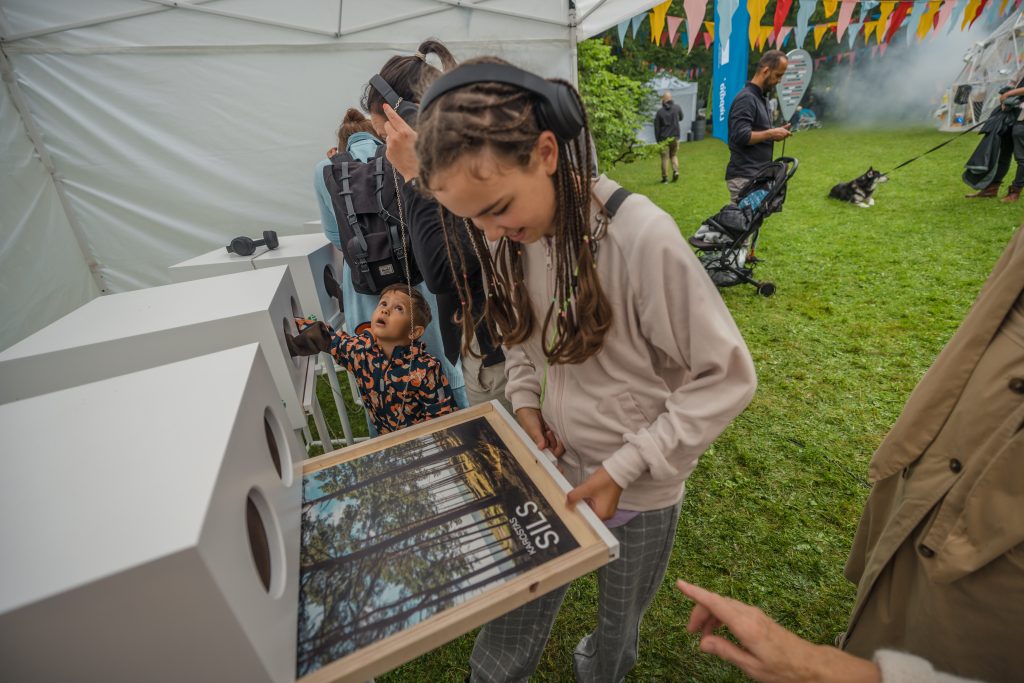
The 2023–2024 sensory mapping results informed our development of multisensory art activities, highlighting the immersive and multimodal nature of Karosta’s ecosystem.
Challenges
Legislation for the Liepāja pilot activities and the inclusion of policymakers in the local coalition was not a struggle, as the pilot was executed by a municipal department. However, engaging local communities in activities at a remote location was more challenging. Public participation in Liepāja is universally low; for instance, only 28% of inhabitants voted in the municipal elections in 2021. To engage local communities, we approached community leaders, placed our activities within larger local public gatherings, and provided transport and light catering for the attendees of the remote events.
Another stimulating challenge when working with the topic of biodiversity is taking more-than-human needs into account. To meet this agenda, we invited artists to use as many biodegradable materials as possible or to produce impermanent interventions, reusing any props multiple times. Our approach followed nature’s cycles and seasonality, including more active public engagement on-site during the warm season while letting the site rest during the colder months. Taking biodiversity into account, only limited groups of participants were invited to explore the impermanent art activities in the peripheral “empty” zones of the Karosta Freedom Trail. Meanwhile, large-scale interventions were organized within existing festivals in urban centers to maximize reach without disturbing sensitive habitats.
Qualitative Impact
According to its inhabitants, Karosta is a district that lacks visual art experiences and gathering places. Our pilot activities addressed this by adding visual art elements to existing festivals in Karosta (Karosta Festival, Lāčplēša Garden Festival) and the Liepāja city center (Sea Festival). We are currently disseminating these results through augmented reality for preservation (currently in production), which adds to Karosta’s cultural tourism offering.
The Liepāja pilot provided an impulse for local creatives to develop stronger collaborations and a unified Karosta “brand”. Local non-governmental organizations have begun collaborating on event production and project applications, while also expanding their international networks. Furthermore, artists from other districts and abroad have shown increased interest in Karosta. In November 2025, the artist organization ASTE. Art, Science, Technology, Education organized an exhibition in the Liepāja city center, inviting artists from the Karosta open-air exhibition to adapt their pieces for a gallery space to reach a broader audience.
The storytelling and research conducted during the Liepāja pilot have contributed to ongoing discussions regarding the development and well-being of this peripheral district. Consequently, Liepāja 2027 – European Capital of Culture is giving special attention to Karosta in its programming, inviting organizations to develop collaborative urban artwork there. The creative team of the Future DiverCities Liepāja pilot has been approached by Liepāja 2027 curators and partner organizations to share project outcomes, thereby fostering the long-term continuation of its results.
Key Lessons & Insights
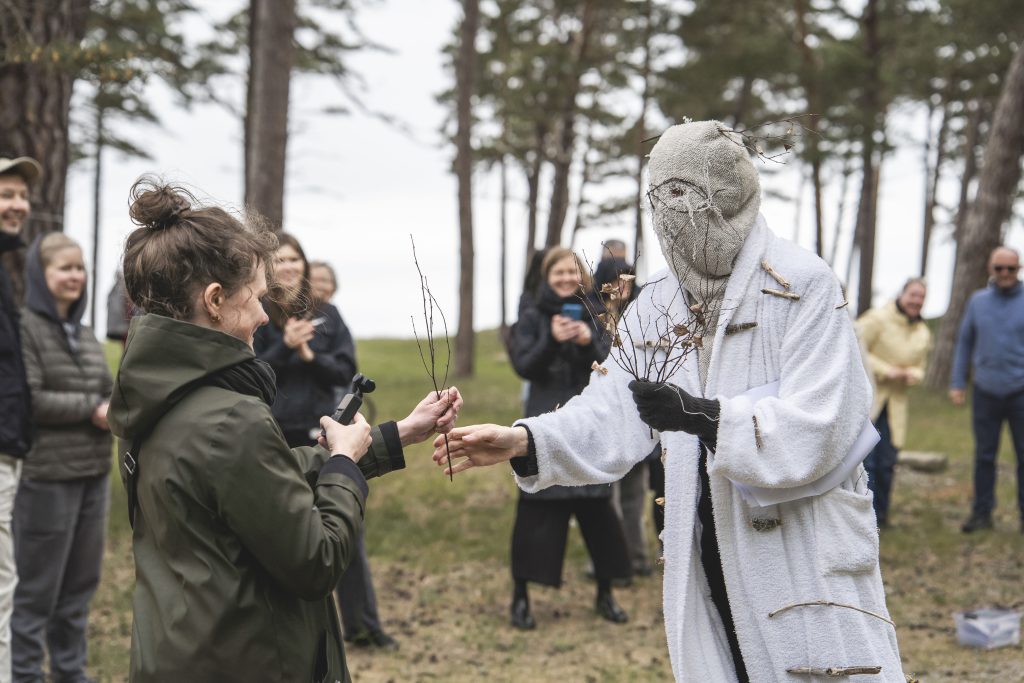
Working with the public perception of a place requires navigating ambivalence to accommodate a diversity of stories and opinions within a recognizable narrative. While interviewing the local community of Karosta, we realized how significantly internal perceptions can differ from external ones. Liepaja pilot added new imagery and artworks to represent the current local identity and to expand the public narrative around Karosta district.
Embodying the paradoxes of Liepāja, Karosta—whose name translates to “War Port”—is seen by locals and regular visitors as a retreat for peace and greenery. Furthermore, while a local coalition defined the project’s goal as changing Karosta’s image “from beast to beauty,” a mapping exercise revealed a deeper truth: when asked to mark “dangerous” versus “beautiful” locations, participants identified the exact same places as being both.
Later in the project’s development, a biologist noted that the degrading military infrastructure is not just a symbol of decay, but also one of preservation. The concrete masses have protected the Karosta coastline from erosion, sheltering a multispecies habitat. While this example signifies a fortunate, mutually beneficial relationship between nature and culture, increased awareness of ecological processes can help navigate environmental threats and protect a sustainable, multispecies future.
Legacy: 10 years ahead
We hope that the approach of the Liepāja pilot will add to the ecological awareness in both culture and policymaking, as local artists and organizations participated in the pilot’s local coalition and cultural production activities. We hope that the local community, cultural producers, and administration will pay attention to and preserve the ecosystem services local biodiversity provides, recognizing the vitality, cultural, and utilitarian value of seemingly ’empty’ green urban territories. Undeveloped territories are particularly dependent on community involvement, which is showcased at Karosta beach; continuously proven to be the most polluted beach in Latvia, it is not maintained by the municipality because it is not an official swimming place.
As the military heritage degrades in Karosta, the popularity of the district as a tourism and recreation destination does not decrease but shifts toward being a nature and culture hub, making the local community feel closer to each other and the rest of the city. We hope that the local artists and cultural NGOs will gain from the increased visibility and international scope of the project and will continue active collaboration, thus contributing to the Karosta “brand” and sustaining the pilot’s initiatives.
Cluster: Biodiversity
The approach of Liepaja pilot is inspired by natural and cultural diversity drive long-term resilience – a system made of many symbiotic elements is more adaptable to changing circumstances – aligning with the New Bauhaus principles of beauty, sustainability, and inclusiveness. By utilizing curated outdoor activities, we fostered emotional bonds and trust between the community and their environment as foundation to sustainable urban development. We identitfied already active yet unrecognised use of ecosystem services in Karosta undeveloped territories, especially by under-resourced inhabitants, and popularised it through culture-led activities as an example of the economic and cultural benefit from biodiversity preservation in urban context.
The implementation was structured around three strategic pillars:
Inclusiveness: Local organizations, scientists, and community groups (from youth to seniors) collaborate in workshops to map the area’s identity and prototype development scenarios.
Beauty: Artists used biodegradable materials or repeated application of produced elements, and non-material practices—like sound art and AR—to highlight environmental fragility and the moral considerations behind the perception of beauty.
Sustainability: The project introduced “Nature Service Stations” which popularised the concept of ecosystem services and reciprocal exchange, where humans perform beneficial actions for the environment in return for the ecosystem resources they consume.
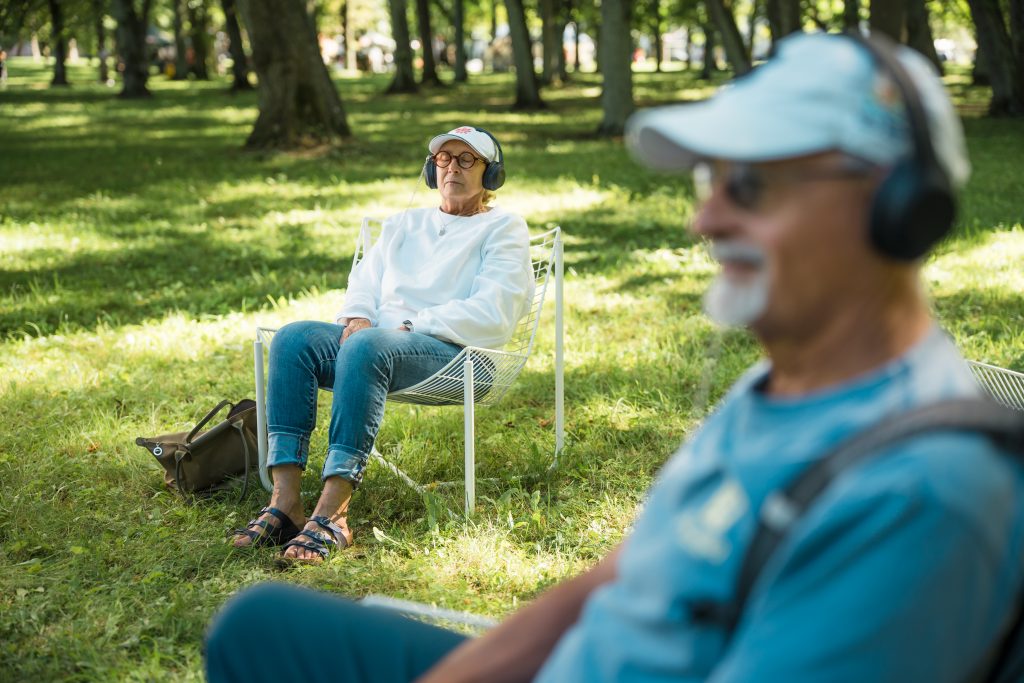
The multisensory approach to both data-gathering and artistic interventions emphasized the importance of embodied perception in fostering interspecies connection and an appreciation of the mutual benefit that human and non-human actors provide to each other. Goggles altering colour perception, underwater sound recordings, augmented reality experiences, olfactory recordings, and other forms of art provided an alternative vision of the local environment, inspiring an empathetic attitude towards the needs of other species.
Our findings underscore biodiversity’s importance to the local community. By adopting an ecosystem services approach, residents can better preserve their environment while facing industrial growth—transforming Karosta’s reputation from one of ruins and danger to one of nature- and culture-led well-being.
“In connection with this project we visited places that I did not even know existed. Therefore, every day we saw new views, how the nature changes and how insects start to wake up. I liked this open-air project because [inside] it would be much sadder and not such a productive time.” Sensory mapping participant, 2024
Discover the Pilot:
Explore the local coalition’s perspective through the Sensory Video
Dive into the Sensitive Mapping Sessions around Karosta