
MARSEILLE
La Friche and Chroniques have teamed up with Terrains Vagues and Pepins Production, two local associations specialised in architecture, urban greening and co-design. The Marseille team takes over a garden located in Crimée street that embodies aspects that the project seeks to explore: commoning areas, greening spaces and the different relationships with non-human beings.
Marseille has seen recent major problems of space management, with deadly collapses of dilapidated buildings, and the city has very important regeneration plans. The approach on Commoning aims at creating citizen-led processes, fostering citizens participation and a form of renewed collective ownership of the area, whilst exploring positive applications of the Nudge theory.
During the co-design workshops, the inhabitants and users of the garden will be engaged into collective activities and create cooperation dynamics that will perdure even after the end of Future Divercities project.
The Starting Point
The Marseille pilot addressed the challenge of how to activate a shared space in a socially diverse residential context without imposing predefined uses or top-down solutions. Although the garden already existed, it was underused by certain segments of the local population and lacked a collectively defined role. Usage was largely limited to children and their mothers living in the adjacent housing complex, while other groups—such as teenagers, young adults, and fathers—were noticeably absent.
The core challenge was therefore not spatial degradation, but the absence of shared governance, collective imagination, and inclusive participation. The project sought to avoid treating the garden as a neutral public space or a finished infrastructure, and instead approached it as a potential common: a space whose meaning, rules, and future would need to be negotiated collectively. This required time, trust-building, and methods capable of engaging residents as co-authors rather than beneficiaries, while navigating existing social dynamics, rhythms, and constraints within the neighbourhood.
“My favorite memory is when we were together, chatting during sewing workshops and at lunchtime.” – Nassima, she lives in the building near the Garden
The Approach
The response was a bottom-up, co-design methodology centered on commoning practices rather than immediate physical transformation. Terrains Vagues and Pépins Production positioned themselves as mediators, working to facilitate community reappropriation of the garden rather than defining its future in advance. The approach prioritised presence, listening, and progressive engagement over visible outputs.
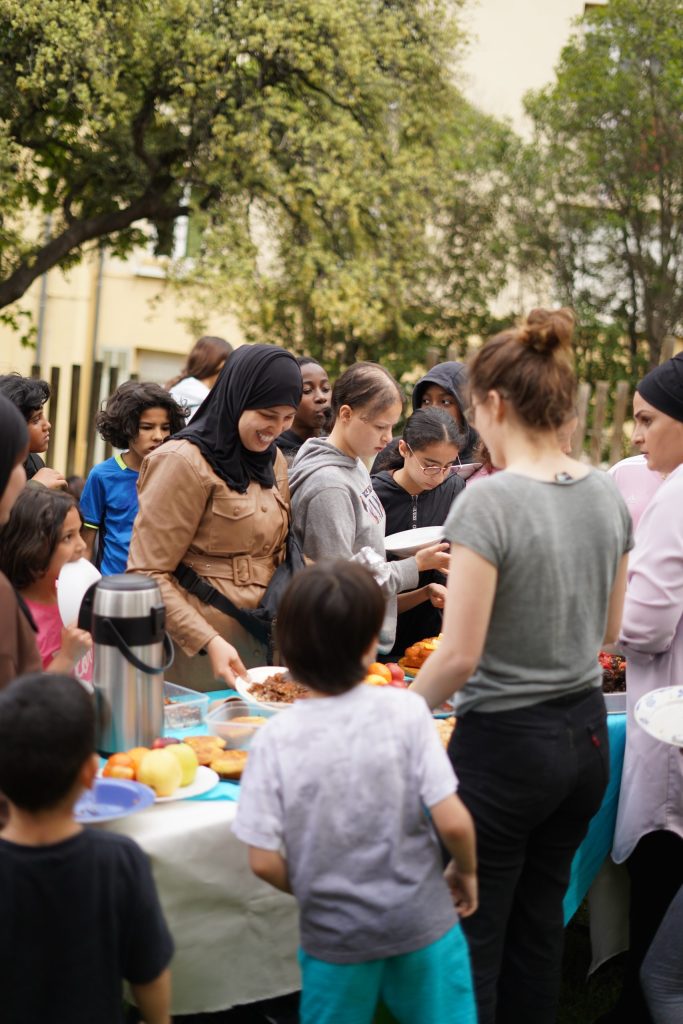
Activities included informal meetings, shared meals, exploratory workshops, mapping exercises, and seasonal gardening and ethnobotanical practices. These moments allowed residents to gradually take ownership of the space, articulate desires, and identify obstacles together. The project was developed in close coordination with existing local actors, including residents’ associations and organisations already active in the area, ensuring alignment with ongoing initiatives and everyday uses of the site.
By embedding the project within the existing social and ecological ecosystem of the garden, the pilot established a framework where commoning could emerge through shared care, collective decision-making, and repeated encounters over time.
Key Moments & Decisions
A first crucial decision was to treat the initial phase as a theoretical and relational stage rather than a construction phase. This choice made it possible to focus on community activation and co-design before any physical intervention, acknowledging that commoning requires social foundations.
Another defining moment was the decision to align the project calendar with local events and associations’ activities, notably using existing festivals and gatherings as entry points to meet residents and introduce the project. This helped anchor the initiative in familiar rhythms rather than creating parallel dynamics.
Seasonal workshops—such as botanical walks and ethnobotanical activities using plants already present in the garden—also played a key role. These practices connected human and non-human dimensions of the site while offering accessible, hands-on ways for residents to engage. Together, these moments helped shift the garden from a passive space into a shared process of exploration and collective imagination.
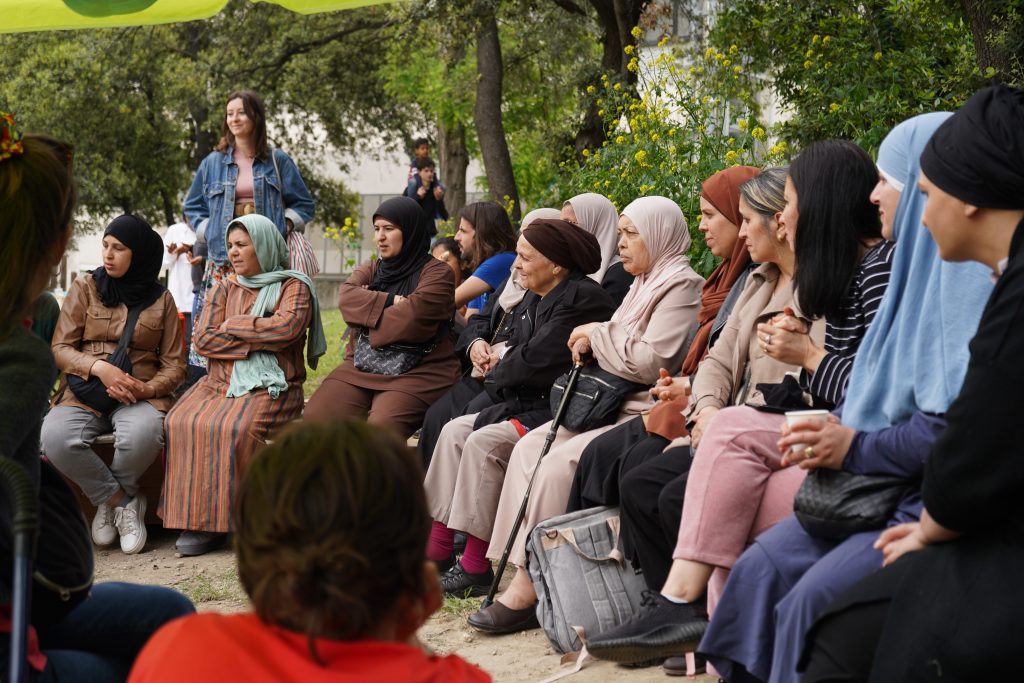
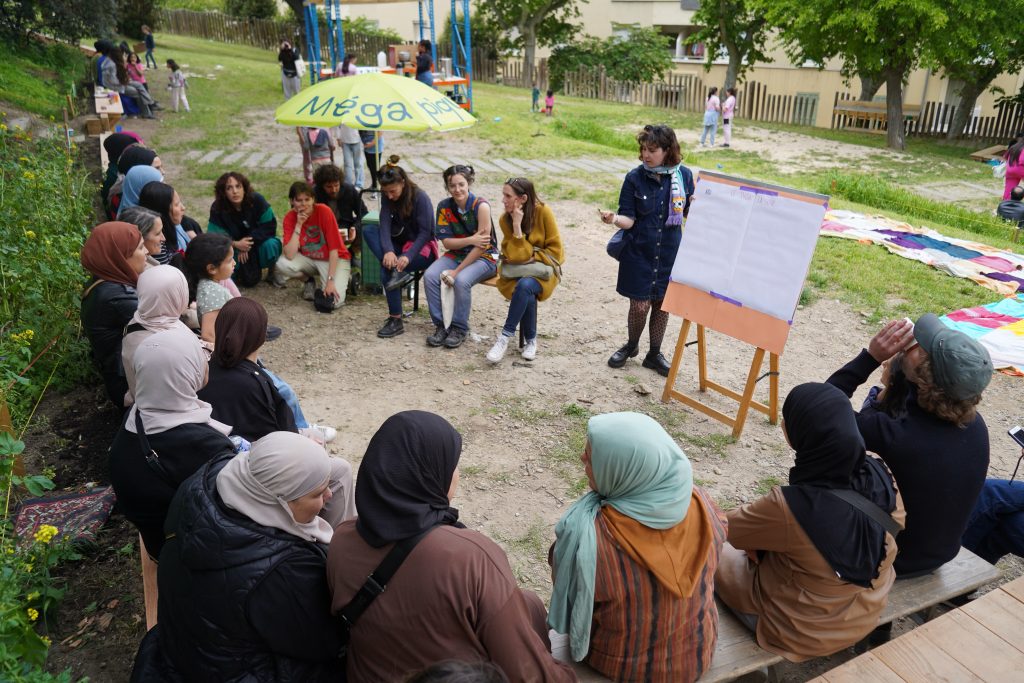
During the “Méga Pic Nic”, mums and women from the neighbourhood met to discuss the future of the garden.
© Hugo Bougouin
Challenges
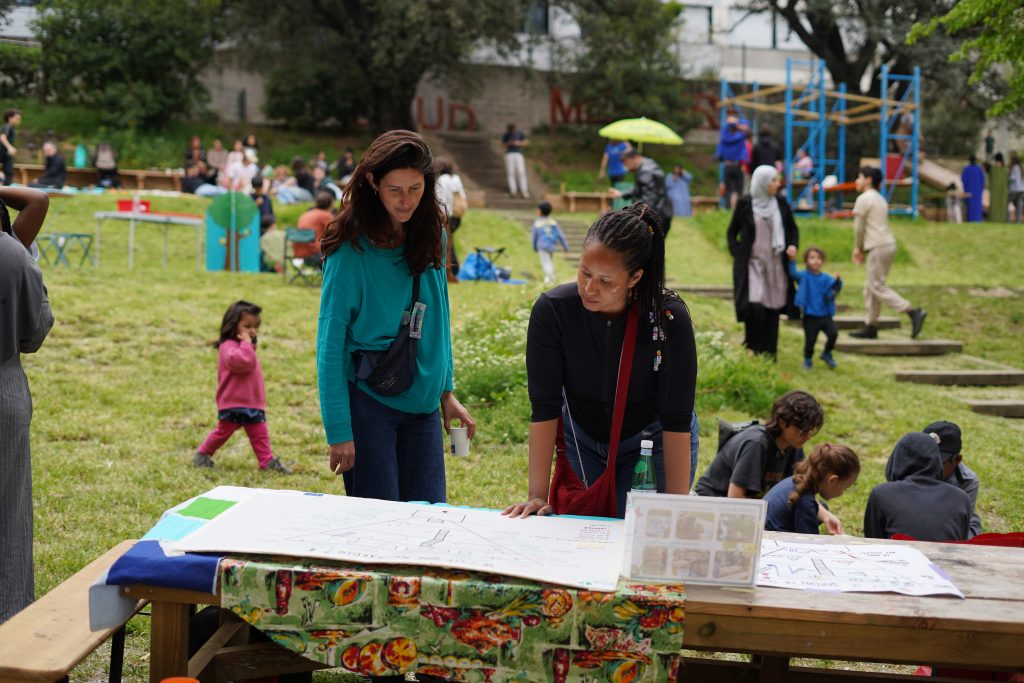
During the “Méga Pic Nic”, mums and women from the neighbourhood met to discuss the future of the garden.
© Hugo Bougouin
One major challenge was maintaining horizontal governance while engaging a wide range of voices. Ensuring inclusivity required time and careful facilitation, as not all residents had the same availability, confidence, or expectations regarding participation. Rather than forcing consensus, the project embraced gradual engagement and multiple entry points.
Another challenge was the uneven presence of different demographic groups. While children and mothers were highly present, young adults and fathers were largely absent during early activations. This highlighted the need to adapt formats, schedules, and outreach strategies over time to broaden participation.
Finally, working without immediate physical outcomes required managing expectations from both residents and institutional frameworks. This was addressed by clearly framing the first phase as a co-design and commoning process, where the main outcome was the strengthening of relationships, shared understanding, and collective capacity to act together.
Qualitative Impact
Qualitatively, the pilot contributed to redefining the garden as a shared resource rather than a residual green space. Through repeated collective activities, the project strengthened social ties between residents and local organisations, fostering a sense of shared responsibility and care.
The approach also demonstrated an alternative model for culture-led urban action in Marseille: one that values slowness, mediation, and co-design over immediate visibility. By foregrounding commoning practices, the pilot offers a transferable methodology for other residential contexts where physical intervention alone would be insufficient or premature.
Beyond direct participants, the project reinforced the role of cultural actors as facilitators of collective processes, capable of working within existing ecosystems and supporting inclusive urban ecologies. Its impact lies less in transformation of form than in the transformation of relationships and governance imaginaries.
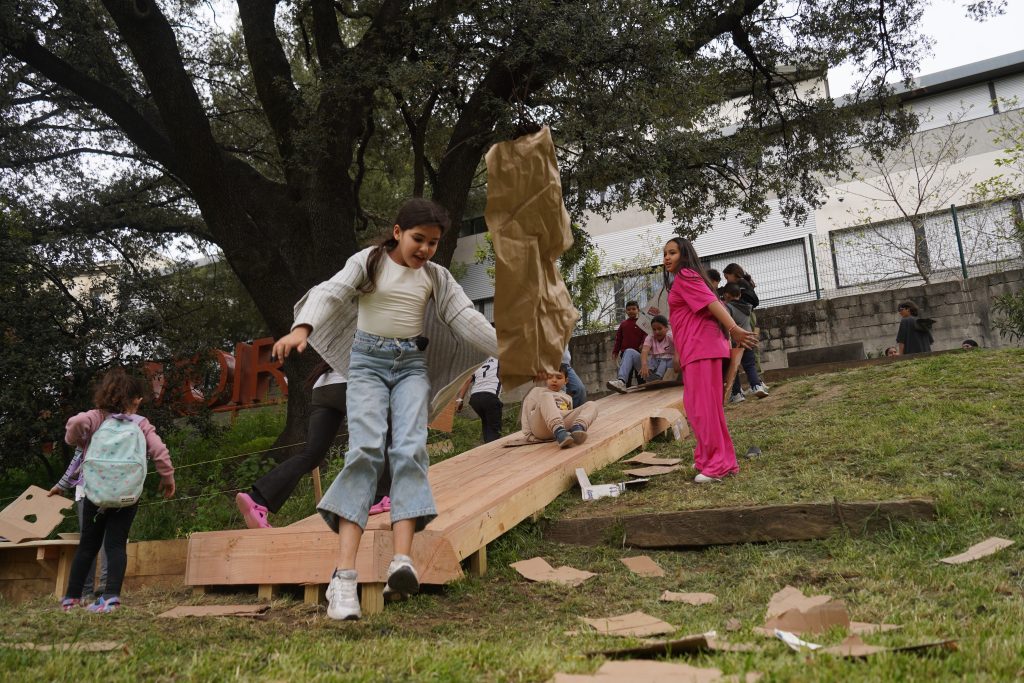
“My best memory is when we did the construction activities!” – Halima, she lives in the building near the Garden
Key Lessons & Insights
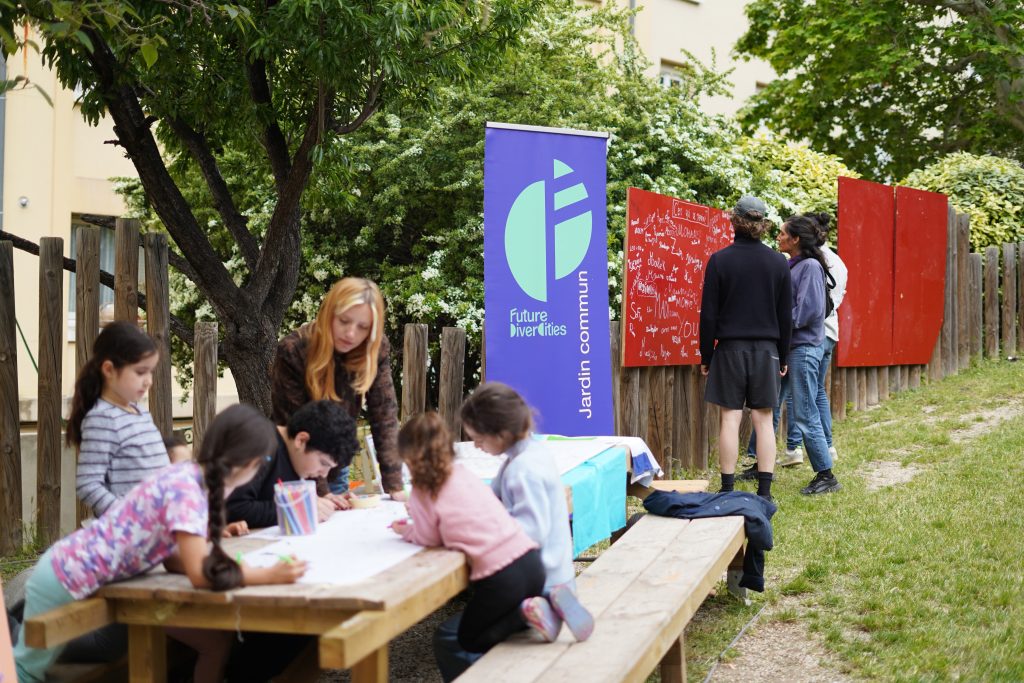
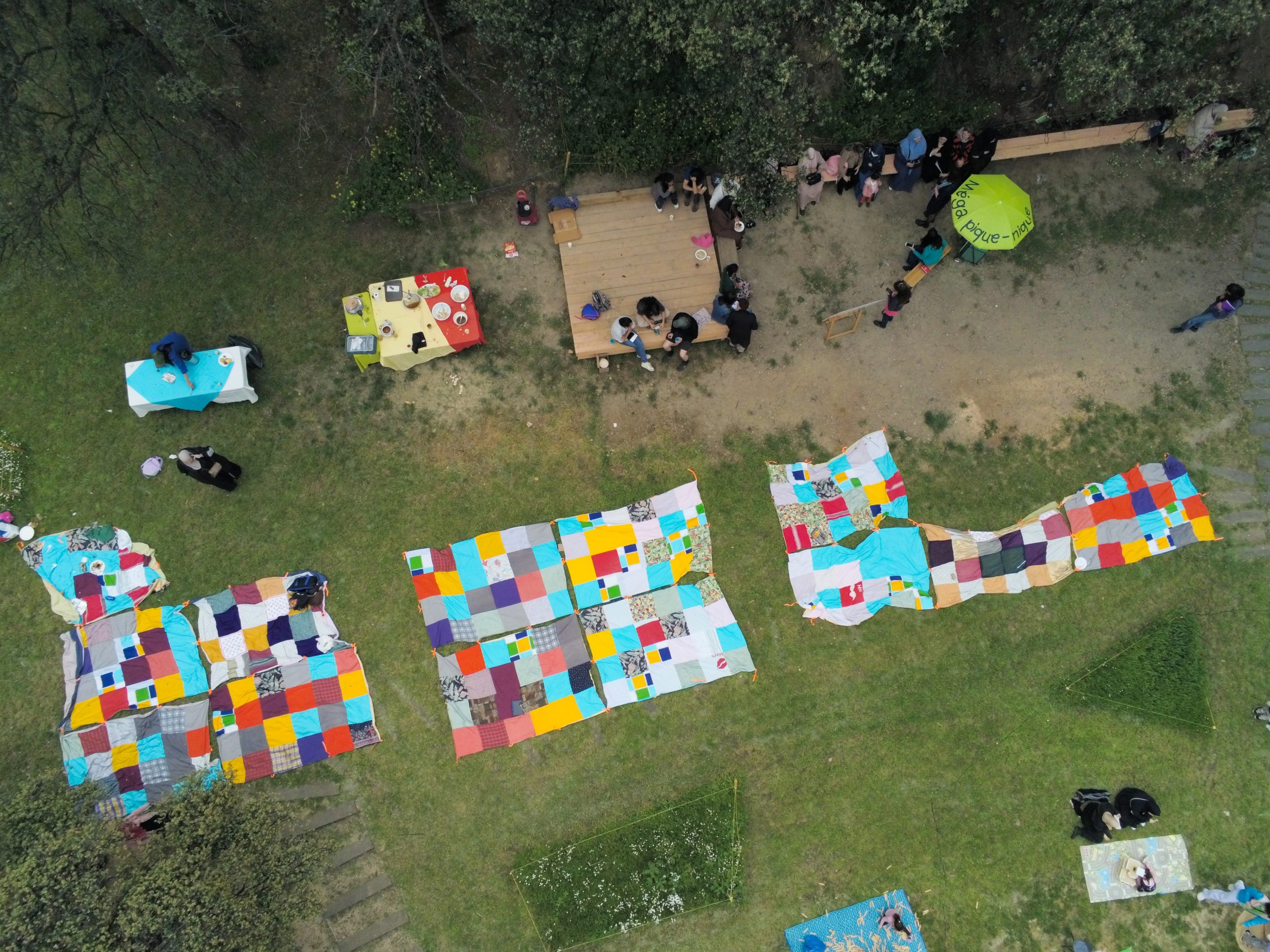
The final event in the Garden, the “Méga Pic Nic”, © Hugo Bougouin
“This year marks 15 years since I moved into this residence. At the time, there wasn’t as much greenery in the garden and there were no structures.” – Nevine, she lives in the building near the Garden
One key insight from the Marseille pilot is that commoning cannot be rushed or reduced to physical outcomes. Shared spaces do not become commons through design alone, but through time, repeated encounters, and the gradual building of trust. The first phase showed that community activation is already a form of impact, even when no material transformation is yet visible.
Another important lesson concerns the role of cultural actors. Acting as mediators rather than project leaders allowed our local coalition to support collective processes without imposing solutions. This position requires patience and constant adaptation, but it proved essential to maintaining horizontal governance and inclusivity.
The project also revealed how participation is uneven and shaped by everyday constraints. While children and mothers were highly present, other groups remained harder to reach, highlighting the need for flexible formats and long-term engagement strategies. Finally, the garden demonstrated that co-design works best when rooted in existing social and ecological ecosystems, building on what is already there rather than starting from a blank slate.
Discover the Pilot:
Explore the feature on Radio Grenouille